
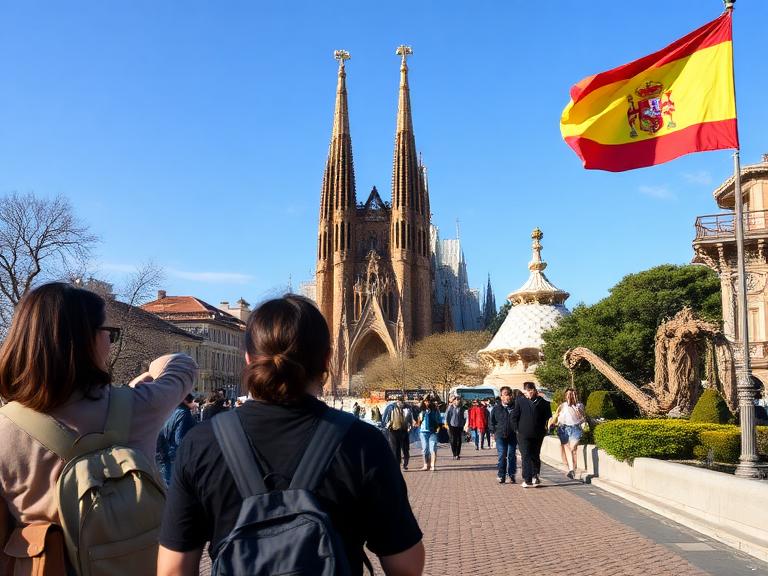
Spain’s government expects tourism to continue growing at a moderate pace despite global instability, including geopolitical tensions in the Middle East. A recent report presented by Minister for Industry and Tourism Jordi Hereu highlights the sector’s resilience and its crucial role in the national economy, contributing 12.3% to GDP. The report also outlines positive forecasts for the Easter period and the coming months, suggesting that Spain remains a strong and attractive destination for both domestic and international travelers.
A key trend identified in the report is the transformation of Spain’s tourism model toward greater sustainability. This includes efforts to reduce seasonality, spread tourism more evenly across regions, and diversify the types of experiences offered. Tourist activity is increasingly extending beyond peak summer months, helping to stabilize employment and economic activity throughout the year. Additionally, growth is being seen in inland and less traditional destinations, signaling a shift away from heavy concentration in coastal areas.
The government also notes a change in tourist behavior, with more visitors seeking cultural, gastronomic, and urban experiences rather than traditional sun-and-beach holidays. In fact, millions of tourists now visit Spain for alternative purposes such as shopping and city tourism. This diversification is helping to attract higher-value visitors, as reflected in a 6.8% increase in tourist spending, which has outpaced the growth in arrivals.
Tourism employment and visitor satisfaction are also on the rise. The number of workers in the sector has reached a record 2.75 million, while surveys show that a large majority of international tourists are highly satisfied with their experience. Many express a strong intention to return, reinforcing Spain’s reputation as a leading global destination and supporting the sector’s continued growth.
Despite these positive indicators, the government remains cautious about external risks. The ongoing conflict in the Middle East could influence travel patterns, potentially benefiting Spain as tourists shift toward safer destinations in the Western Mediterranean. However, rising energy costs and disruptions to air travel could negatively affect demand. To address these uncertainties, Spain is closely monitoring the situation while continuing to invest in its Sustainable Tourism Strategy 2030, aiming to ensure long-term social, environmental, and economic sustainability.
Source: La Moncloae.aspx
V 4 Visa Services L.L.C.
Your Trusted Visa Partner in the UAE
EMAIL US
CALL US
© 2025. All rights reserved.

VISIT US
Shop No 4, Happiness Building, Al Rumailah 1, Ajman - UAE
USEFUL LINKS